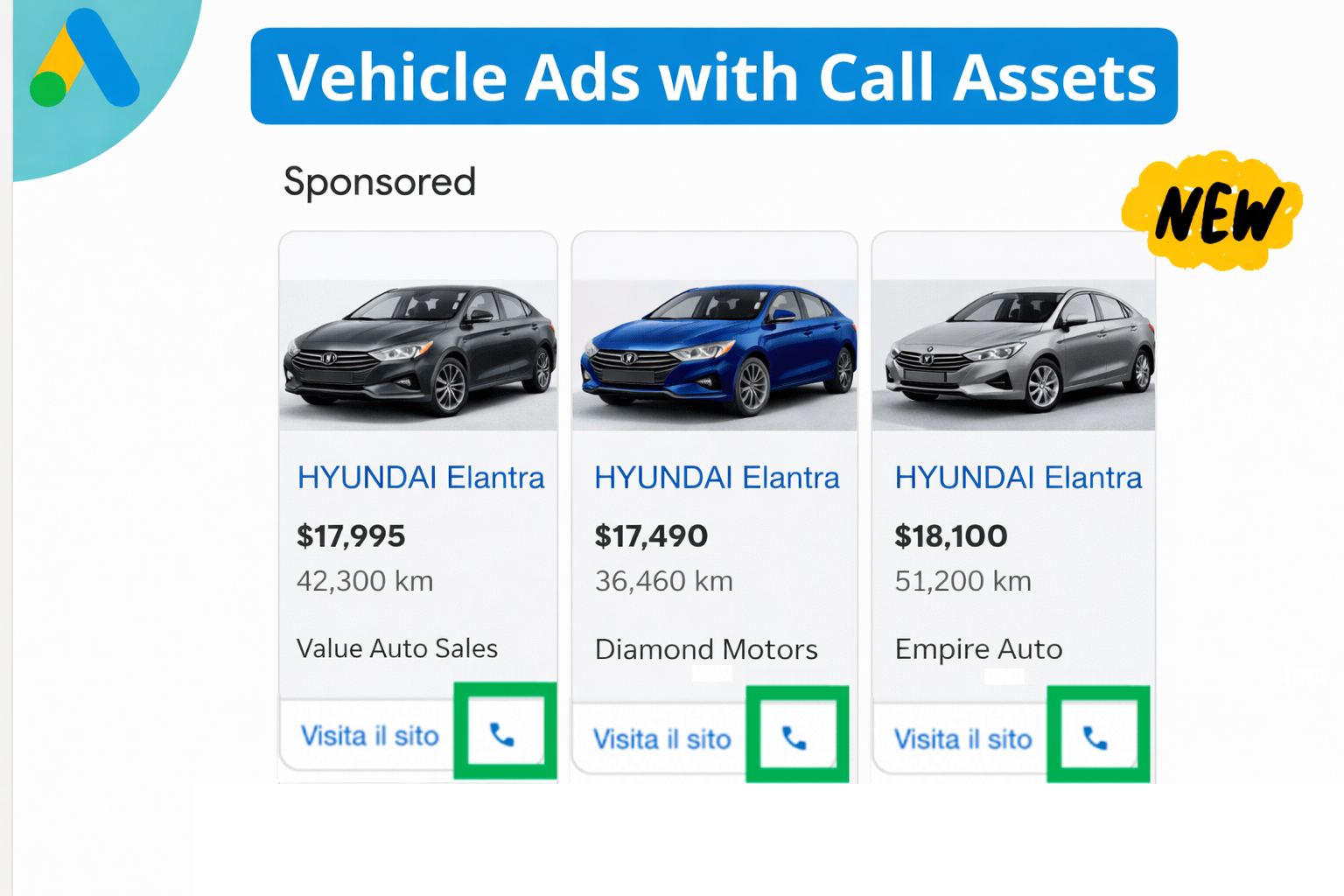
Google has rolled out an exciting update to Vehicle Ads, introducing Call Assets that enable direct click-to-call from the ad itself. This new feature allows car shoppers to connect with dealers instantly, bridging the gap between online browsing and real-time conversations.
Spotted first by Google Ads expert Thomas Eccel on LinkedIn and reported by Search Engine Land on January 7, 2026, this upgrade marks a significant step forward in automotive digital advertising.
What Are Vehicle Ads?
Vehicle Ads (also known as Vehicle Listing Ads) are a specialized format in Google Ads designed specifically for automotive dealers. They showcase actual vehicle inventory including images, prices, mileage, make, model, and more directly in Google Search results. Powered by your vehicle feed data, these ads target high-intent shoppers searching for specific cars.
Unlike traditional text ads, Vehicle Ads provide rich, visual listings that appear prominently on search pages, driving qualified traffic to dealership websites or landing pages.
The New Call Upgrade: How It Works
The latest enhancement integrates Call Assets into Vehicle Ads. Now, when a shopper views your vehicle listing in search results:
- A prominent call button appears alongside the ad details.
- Users can tap (on mobile) or click to initiate a phone call directly to the dealership.
- This creates a seamless, frictionless path from ad impression to live conversation.
This feature is particularly powerful on mobile devices, where most car research happens today.
Why This Matters for Dealers and Advertisers
Car buyers are increasingly seeking immediacy. They want quick answers to questions like:
- Is this vehicle still available?
- Can I schedule a test drive?
- What’s the best price or financing option?
Forms and website visits are great, but nothing beats a real-time phone conversation for building trust and closing deals faster.
Key benefits include:
- Reduced friction: High-intent shoppers can engage immediately without navigating to a site or filling out a lead form.
- Higher conversion potential: Phone calls often convert at higher rates than digital leads, especially in high-value purchases like vehicles.
- Competitive edge: Dealers optimized for calls (with proper staffing and training) will capture more leads, while others risk falling behind.
- Shift in responsibility: With calls becoming a direct ad conversion point, dealerships must prioritize call handling quality, response times, and tracking.
This update aligns with broader trends in Google Ads, where features like call assets are replacing older call-only ads to provide more flexible, AI-optimized experiences.
What Should Dealers Do Next?
- Check your campaigns → Log into Google Ads and review your Vehicle Ads setups (typically in Performance Max campaigns).
- Add Call Assets → Ensure call information is enabled and accurate.
- Optimize for calls → Train staff on handling inbound ad calls, use call tracking tools, and monitor performance metrics.
- Test and iterate → Monitor how the new feature impacts your lead volume and quality.
This upgrade reinforces Vehicle Ads as one of the most effective tools for automotive marketers. By combining rich inventory visuals with instant connectivity, Google is making it easier than ever to turn searches into sales.
Stay ahead in 2026 by embracing these changes — the future of car shopping is faster and more direct than ever.
Source: Based on reporting from Search Engine Land (January 7, 2026) and observations shared by industry experts.
If you’re running Vehicle Ads, this is a must-implement update! What are your thoughts on how calls will impact automotive PPC performance? Share in the comments.