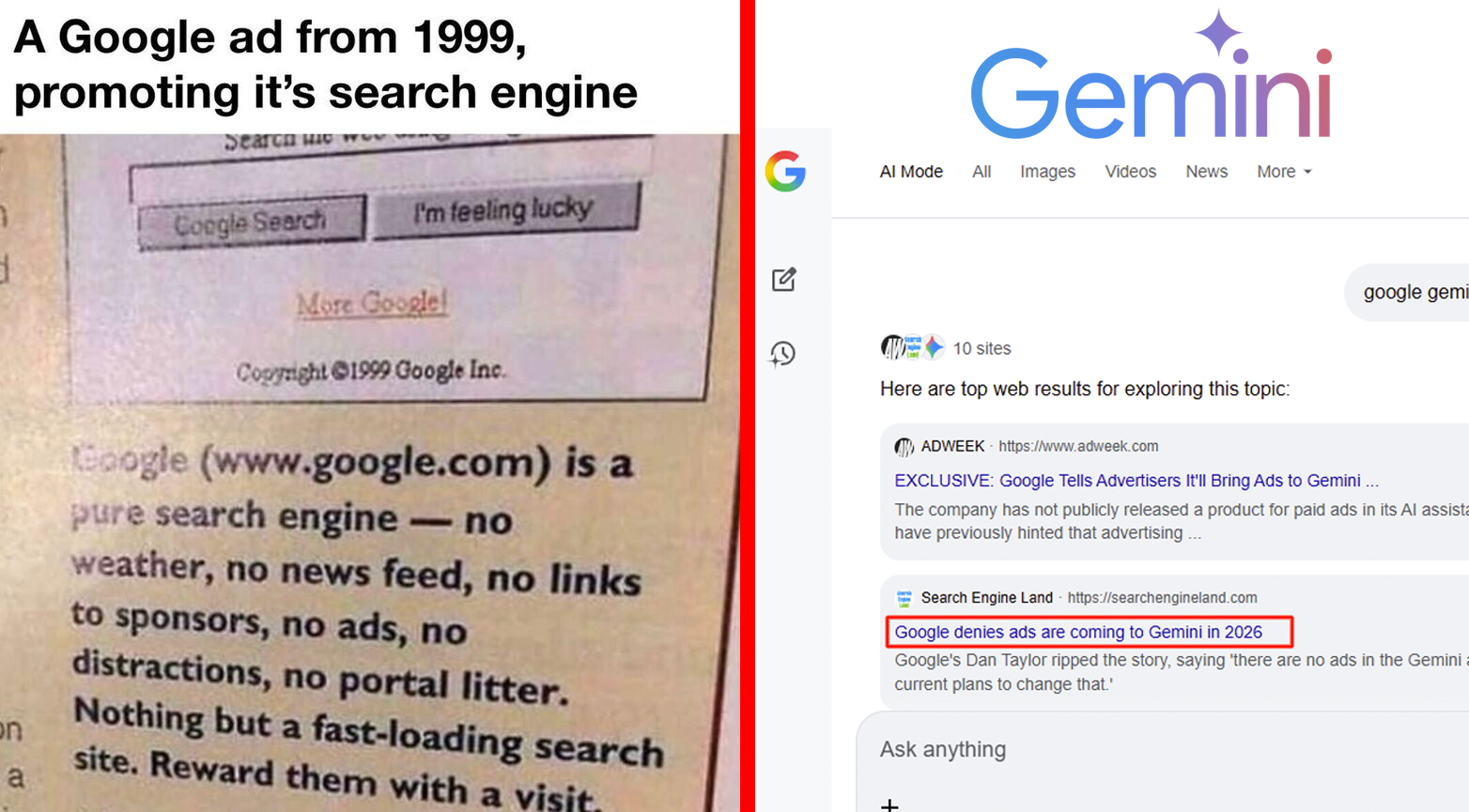
In the dawn of the internet age, Google launched with a refreshing promise: a clean, ad-free search experience. That famous 1999 ad proclaimed it a “pure search engine no ads, no distractions, no portal litter” just fast, relevant results that rewarded users with simplicity. This free, uncompromised approach captured hearts worldwide, building massive user trust and adoption. Fast forward, and the same company now generates hundreds of billions in annual revenue, largely through smart, user-friendly advertising. This transformation didn’t betray the original vision; it amplified it, turning a free tool into a sustainable powerhouse that funds endless innovation. Today, Google’s Gemini AI stands at a similar crossroads—starting free and pure, with the potential to evolve into a multi-billion-dollar revenue engine that benefits everyone.
Google’s Classic Playbook: Start Free, Scale Smartly
Google’s early no-ads stance was genius. It differentiated the company from cluttered competitors, driving explosive growth in users and loyalty. But as traffic soared, so did the need for resources servers, engineers, and constant improvements. In 2000, Google introduced AdWords: simple, relevant text ads that appeared only when they matched a user’s intent. These weren’t intrusive banners; they were helpful suggestions that felt like natural extensions of search.
The results? A virtuous cycle:
- Users got even better, faster, more accurate results.
- Advertisers reached highly engaged audiences.
- Google reinvested billions into free products like Gmail, Maps, YouTube, and Android.
What began as a free service ballooned into Alphabet’s core revenue driver over $200 billion annually in recent years while keeping core search free for billions. The key? Ads enhanced value without ruining the experience. This model proved that starting free builds the foundation, while thoughtful monetization unlocks massive scale and innovation.
Gemini Today: Echoing 1999's Pure, Free Promise
As of January 2026, Gemini mirrors that early Google spirit. It’s ad-free in its core app experience, focused on delivering clean, powerful AI assistance whether creative brainstorming, problem solving, or everyday help. Google’s leadership, including VP Dan Taylor, has emphasized “there are no ads in the Gemini app and there are no current plans to change that.” This purity is winning users: the Gemini app boasts over 650 million monthly active users, with rapid growth fueled by its seamless, distraction-free interface.
Just like early Google Search, this free access drives adoption across diverse users from students in Karachi exploring ideas to professionals worldwide streamlining work. By keeping Gemini uncluttered now, Google builds trust, gathers feedback, and refines the model, setting the stage for long-term dominance in the AI era.
The Positive Evolution: Why Gemini’s Revenue Model Will Be a Win-Win
History shows that free starts lead to billion-dollar successes when monetization is done right. Gemini’s path could follow suit, evolving from free purity to a sustainable powerhouse. Here’s why this progression is exciting and beneficial:
- Sustaining Free Access for Everyone AI is expensive massive compute power, data centers, and talent demand huge investments (Alphabet’s 2025-2026 Cap Ex runs in the tens of billions). A revenue model ensures the core Gemini experience stays free or low-cost, subsidizing access for billions. Premium tiers (like Gemini Advanced) and targeted, helpful integrations could fund this without compromising the base version.
- Fueling Faster Innovation Google’s ad revenue powered moonshots like self-driving tech and quantum computing. For Gemini, revenue could accelerate breakthroughs: better multimodal understanding (text + images + voice), real-time capabilities, or specialized tools for education, health, and creativity. Users in places like Pakistan would gain from faster updates and more powerful features, all while the core remains accessible.
- Creating Smarter, More Helpful Experiences When done thoughtfully like Google’s relevant search ads monetization adds value. Imagine contextual suggestions in Gemini: eco-friendly product ideas during planning queries or verified partnerships for advice. These feel useful, not salesy, enriching conversations while supporting the ecosystem. Free users benefit from an even stronger product, paid options offer ad-free depth, and partners connect meaningfully.
- A Balanced, Transparent Approach Google has learned from the past, prioritizing clear labeling, user controls, and ethical standards. Any future model for Gemini would likely follow suit perhaps optional modes or intent-based integrations ensuring trust remains intact. This isn’t about rushing ads; it’s about smart evolution that rewards the massive user base built on free access.
The Bright Future: Gemini as the Next Billion-Dollar Chapter
Google’s story isn’t one of selling out it’s one of smart growth. Starting free built an empire that now funds free tools for the world. Gemini, launched in that same spirit, is poised to repeat the magic. By beginning ad-free, it captures hearts and minds; by evolving with a positive revenue model, it secures the resources to become transformative on a global scale.
In 2026 and beyond, expect Gemini to follow the proven path: free at its foundation, billion-dollar in impact. This isn’t compromise it’s the natural next step that keeps innovation flowing, access open, and experiences improving for users everywhere. Google’s legacy proves it: the best things start free… and the smartest ones grow to change the world even more.